Philips 3200 LatteGo Review
The Philips 3200 LatteGo is a low-cost superautomatic with a two-part milk system that has no tubes. It makes espresso, coffee, americano, cappuccino and latte macchiato from fresh beans, and it accepts an AquaClean filter that cuts descaling.
We may earn a commission from qualifying purchases. Our editorial verdict is independent.
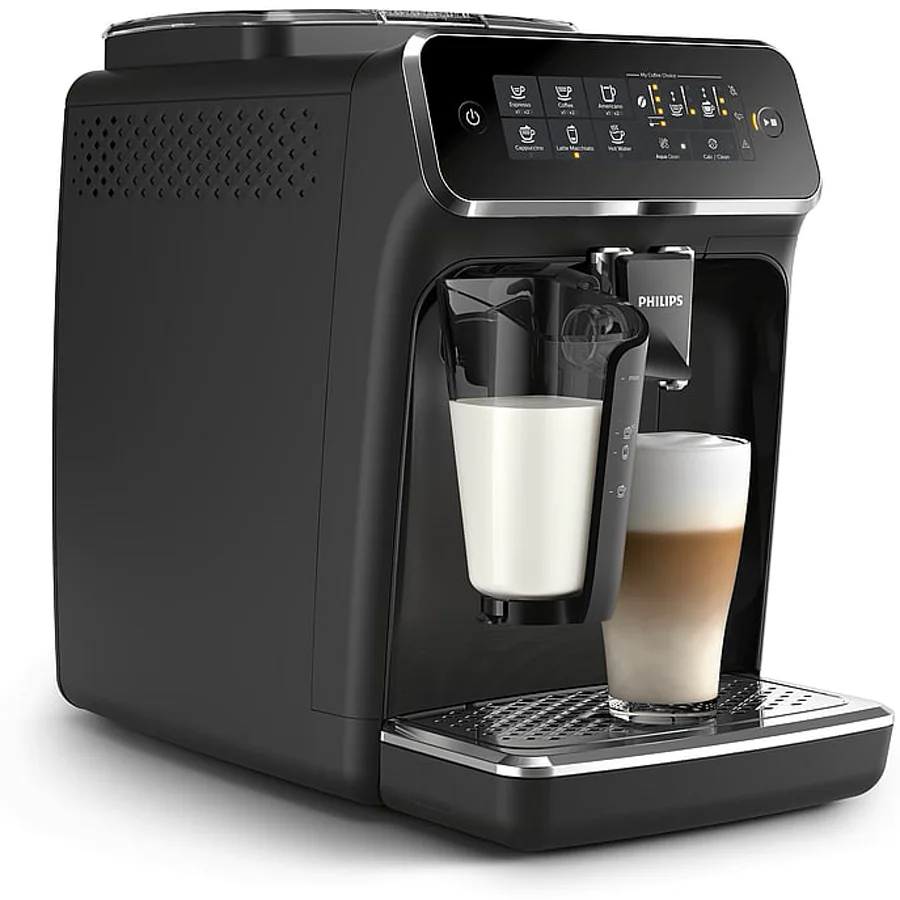
Buy the 3200 LatteGo if you want one-touch cappuccinos for the least money and the least milk cleaning. The espresso is good for the price, not great, and the menu is short. Wait for a sale: the list price is about $800, but it usually sells for an estimated $450 to $600.
Who it’s for
First-time superautomatic buyers who drink a cappuccino or latte macchiato most days and want milk cleanup to take under a minute.
Who should skip it
Espresso purists, people who want flat whites or custom milk drinks saved per person, and homes that want two milk drinks at once.
Strengths and weaknesses
What we like
- LatteGo milk system has 2 parts and no tubes
- AquaClean filter: Philips says up to 5,000 cups without descaling if you change it when prompted
- Removable brew group you rinse under the tap
- Ceramic grinder with 12 settings
- 1.8 L tank and 275 g hopper
- Often on sale well below list price
What to know
- Only 5 coffees plus hot water
- No user profiles and no saved custom milk drinks
- Milk drinks one cup at a time
- Brew group needs a weekly rinse and periodic grease
- LatteGo jug holds only 0.26 L of milk
The Philips 3200 LatteGo is the superautomatic to buy if you want one-touch cappuccinos for the least money and the least milk cleaning. It lists at about $800 but usually sells for an estimated $450 to $600, and Amazon price history shows dips near $400. If you drink mostly black coffee, or want a long drink menu, look elsewhere.
This review draws on manufacturer specifications, manuals and long-term owner reports, not on our own use.
Who the 3200 LatteGo is for
The 3200 fits a home of one to three people who drink one or two milk drinks a day. You fill the LatteGo jug, press Cappuccino or Latte Macchiato, and the machine grinds, brews and froths into the cup.
It is a poor fit for three buyers. Espresso drinkers who care about every shot get better results from a semi-automatic and a grinder; our superautomatic vs semi-automatic guide explains the tradeoff. Homes that want a flat white, a cortado or a saved drink for each person will find the menu too short. Families who make several milk drinks back to back wait for each cup, since milk drinks cannot be made two at a time.
The LatteGo milk system
LatteGo is the reason to buy this machine. It is a plastic jug and a frothing head, two parts in total, with no milk tube. Milk flows from the jug into a frothing chamber that clips to the front of the machine.
Cleaning takes under a minute. Pull the jug off, separate the two parts and rinse them under the tap. Philips lists LatteGo as dishwasher safe. Compare that with a tube-and-carafe system, where milk residue hides in the tube and spout. Our milk system care guide explains why fewer parts means fewer foam problems.
The limits are size and control. The jug holds 0.26 L, enough for about two cappuccinos, so you refill it often. You set milk length per drink, but you cannot change foam texture, so you get thick cappuccino foam or a latte macchiato, with no flat white option.
Coffee quality and settings
The 3200 uses ceramic burrs with 12 grind settings and a 15-bar pump. You choose 3 strength levels and set coffee length for each drink. A pre-brew step wets the grounds before the main extraction. A ground-coffee chute takes one scoop of pre-ground decaf.
Owners commonly describe the espresso as decent and a little thin next to pricier machines, and good under milk. The Americano is made by adding hot water after a shot, which tastes cleaner than a long-pulled coffee. Grind finer to add body. Change the setting only while the grinder runs, and judge after two or three drinks.
The spout moves from 85 to 145 mm, so short cups and most 12 oz mugs fit.
AquaClean filter and descaling
The 3200 accepts Philips’s AquaClean filter. Philips says that with the filter in place and changed each time the machine asks, you can make up to 5,000 cups before you need to descale. Without a filter, the machine counts usage and prompts a guided descale.
A filter pays off in hard water. Test your water first with the strip in the box; our water filter guide and our descaling guide give the decision rules and schedules.
Daily and weekly routine
- Every day: Empty the drip tray and coffee grounds container, which Philips rates at 12 servings. Refill fresh water. Rinse the two LatteGo parts after milk drinks.
- Every week: Take the brew group out from the side door, rinse it under lukewarm water, let it dry and put it back.
- Every couple of months: Grease the brew group with the tube Philips supplies, on the schedule in the manual. Skipped grease is a common reason a Philips brew group starts to squeak or stick.
- When prompted: Change the AquaClean filter or descale.
Philips 3200 LatteGo: one-touch cappuccinos with a two-part milk system you rinse in under a minute.
Check price →Size and kitchen fit
The machine measures 246 mm wide, 371 mm high and 433 mm deep, about 9.7 x 14.6 x 17 in. It fits under most wall cabinets, but you fill beans from the top, so leave a few inches of space. The water tank and grounds drawer come out from the front, so you can tuck it into a corner.
Running costs
Expect to buy AquaClean filters if you use them, plus milk system cleaner and degreasing tablets if you follow Philips’s full routine. Lubricant comes in the box and lasts a long time. Overall costs are lower than a Jura’s, because there are no cleaning tablets for the brew group.
3200 LatteGo vs Magnifica Evo and Jura E8
| Philips 3200 LatteGo | De’Longhi Magnifica Evo LatteCrema | Jura E8 | |
|---|---|---|---|
| Typical price band | About $450 to $600 (estimated) | About $600 to $900 | About $2,500 to $2,800 |
| Milk system | LatteGo, 2 parts, no tubes | Carafe with tube | HP3, tube from any container |
| Grinder | Ceramic, 12 settings | Conical burr, 13 settings | P.A.G.2, 7 levels |
| Coffee drinks | 5 plus hot water | 7 recipes | 27 specialties |
| Brew unit | Removable, rinse and grease | Removable, rinse | Fixed, tablet cleaning |
The Magnifica Evo is the closest rival. It adds an Iced Coffee button and a cheaper steam wand version, but its carafe takes longer to clean. The Jura E8 makes finer foam and many more drinks, with less hands-on cleaning, for four to six times the price.
Is the 3200 still the right Philips to buy?
Philips also sells models above the 3200 with more drinks. They cost more and keep the same LatteGo idea. Buy the 3200 if the five drinks cover what you make; it is the one most often discounted. Our budget espresso machines page compares it with machines under about $500, where it fits only on sale.
Buying advice
Check for model EP3241/54 and a LatteGo jug in the photos. Some listings show the cheaper Philips 2200, which has a classic steam wand instead. The price swings widely, so set a price alert and buy on a sale. Confirm the warranty term on the listing before you pay.
Key specifications
- Model (US)
- EP3241/54, glossy black
- Machine type
- Superautomatic
- Drinks
- Espresso, Coffee, Americano, Cappuccino, Latte Macchiato, Hot Water
- Grinder
- Ceramic, 12 settings
- Pump
- 15 bar
- Milk system
- LatteGo, 2 parts, 0.26 L jug
- Settings
- 3 strengths, adjustable coffee and milk length
- Water tank
- 1.8 L (61 oz)
- Bean hopper
- 275 g (9.7 oz)
- Waste container
- 12 servings
- Spout height
- 85 to 145 mm (3.3 to 5.7 in)
- Power
- 1,500 W, 120 V
- Dimensions (W x H x D)
- 246 x 371 x 433 mm (9.7 x 14.6 x 17 in)
- Weight
- 8 kg (17.6 lb) per Philips
Alternatives worth considering
Should you buy the Philips 3200 LatteGo?
Buy the 3200 LatteGo if you want one-touch cappuccinos for the least money and the least milk cleaning. The espresso is good for the price, not great, and the menu is short. Wait for a sale: the list price is about $800, but it usually sells for an estimated $450 to $600.
Accessories for the Philips 3200 LatteGo
Related reviews and guides
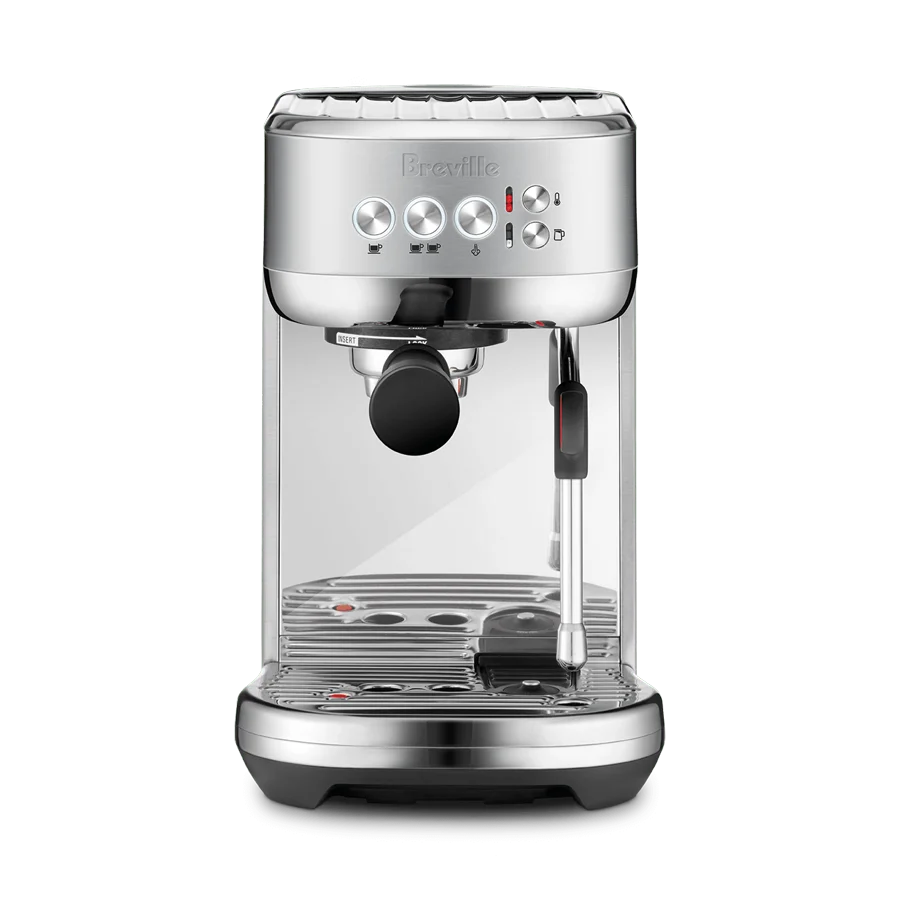 Breville Bambino Plus Review (BES500)The Bambino Plus BES500 heats in about 3 seconds and steams milk on its own. It suits small kitchens and beginners who will add a burr grinder.
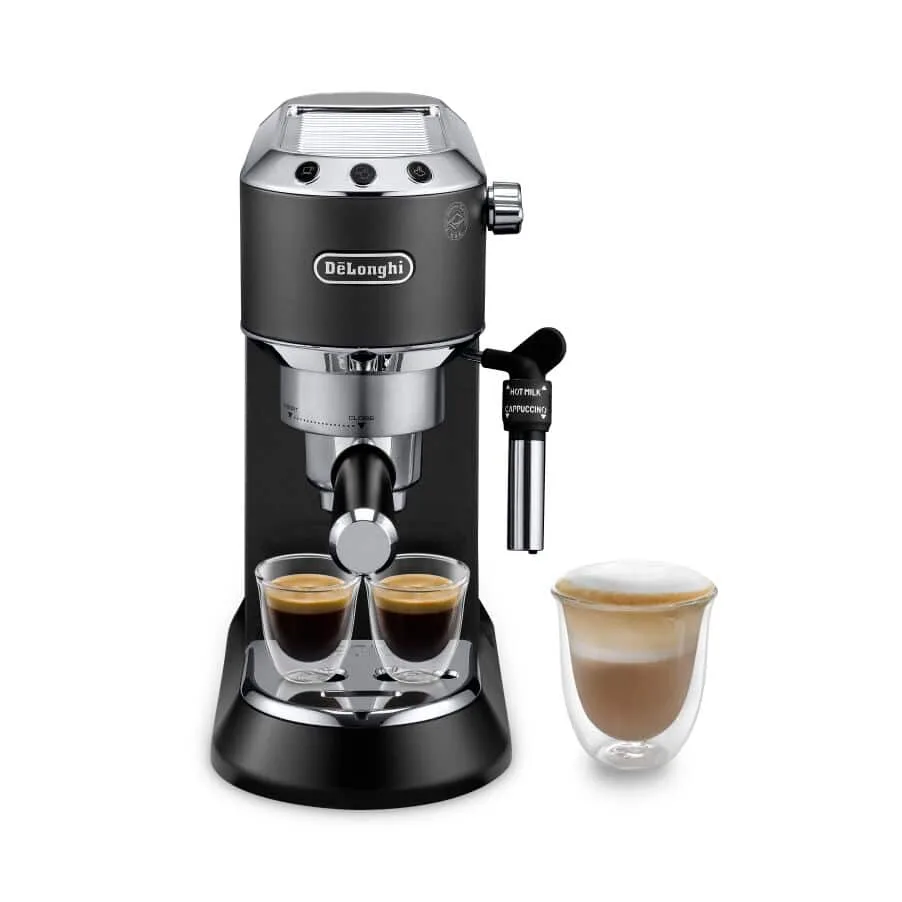 De'Longhi Dedica EC685 ReviewThe Dedica EC685 is a 6-inch-wide espresso machine with pressurized baskets that forgive pre-ground coffee. It suits beginners with small kitchens and small budgets.
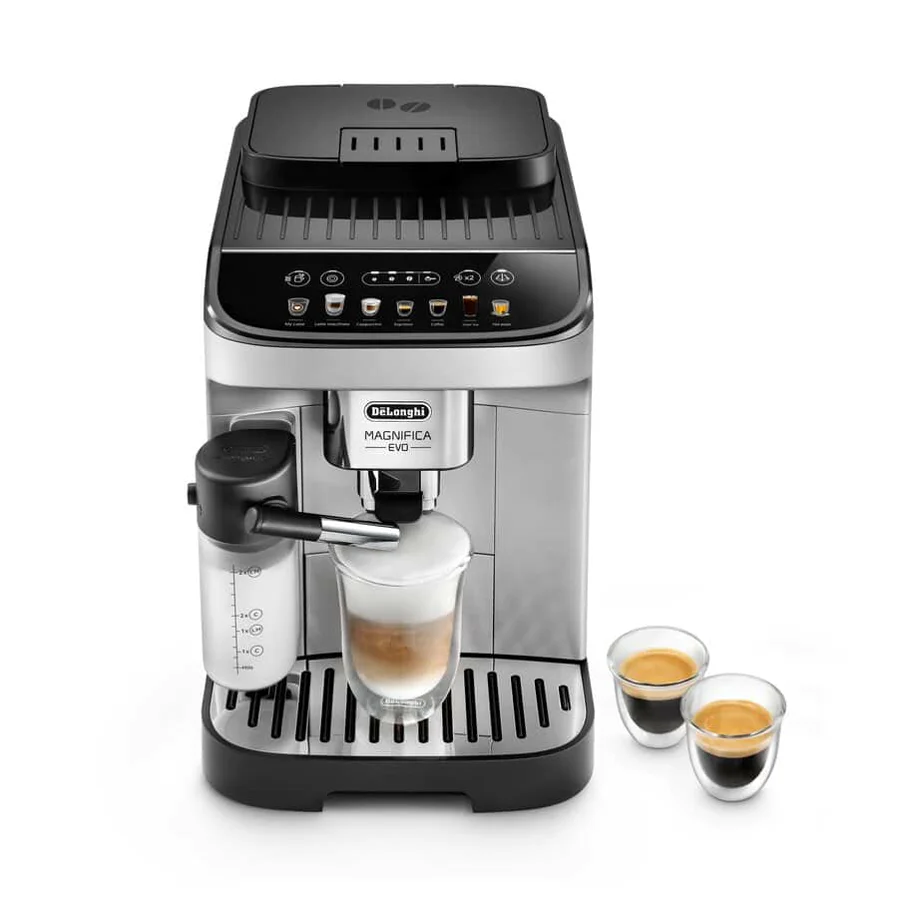 De'Longhi Magnifica Evo ReviewThe Magnifica Evo comes in two US versions: ECAM29043SB with a steam wand and ECAM29084SB with a LatteCrema carafe. Here is which to buy and why.