Buying guide
Best Espresso Machines for Beginners
The Philips 3200 LatteGo is the easiest espresso machine for beginners. The Breville Bambino Plus is the pick if you want to learn shots and milk.
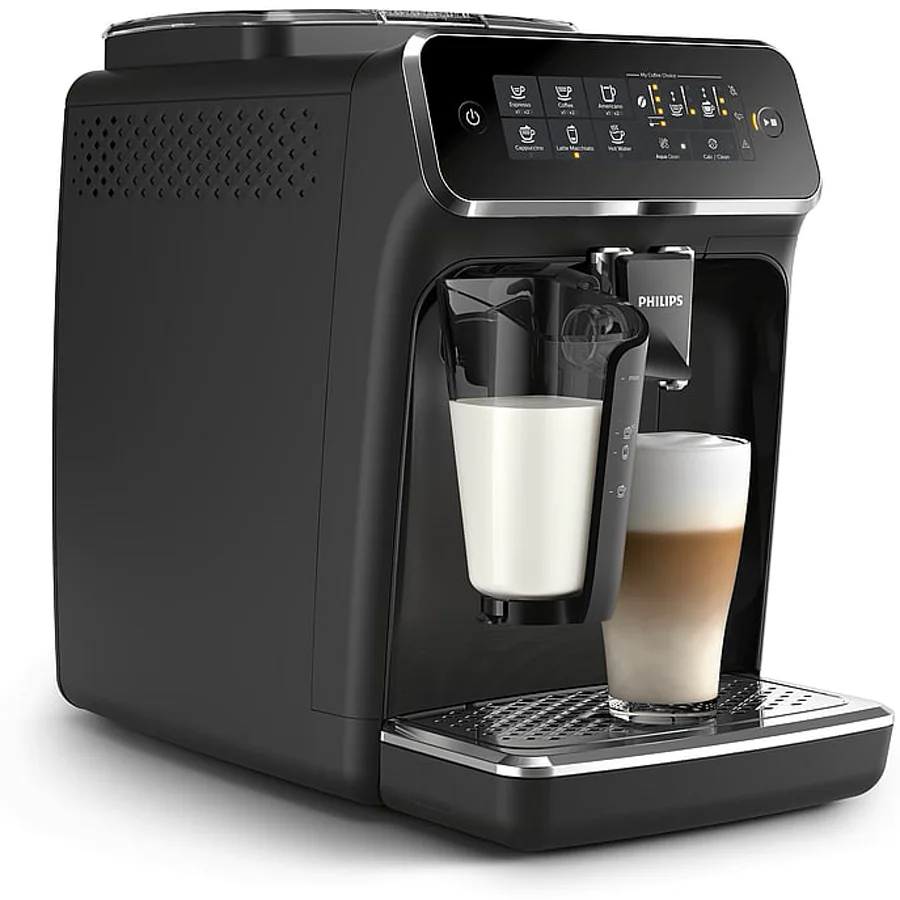
Philips 3200 LatteGo
Press a button for a cappuccino, then rinse a two-part milk carafe, for beginners who never want to learn barista skills.
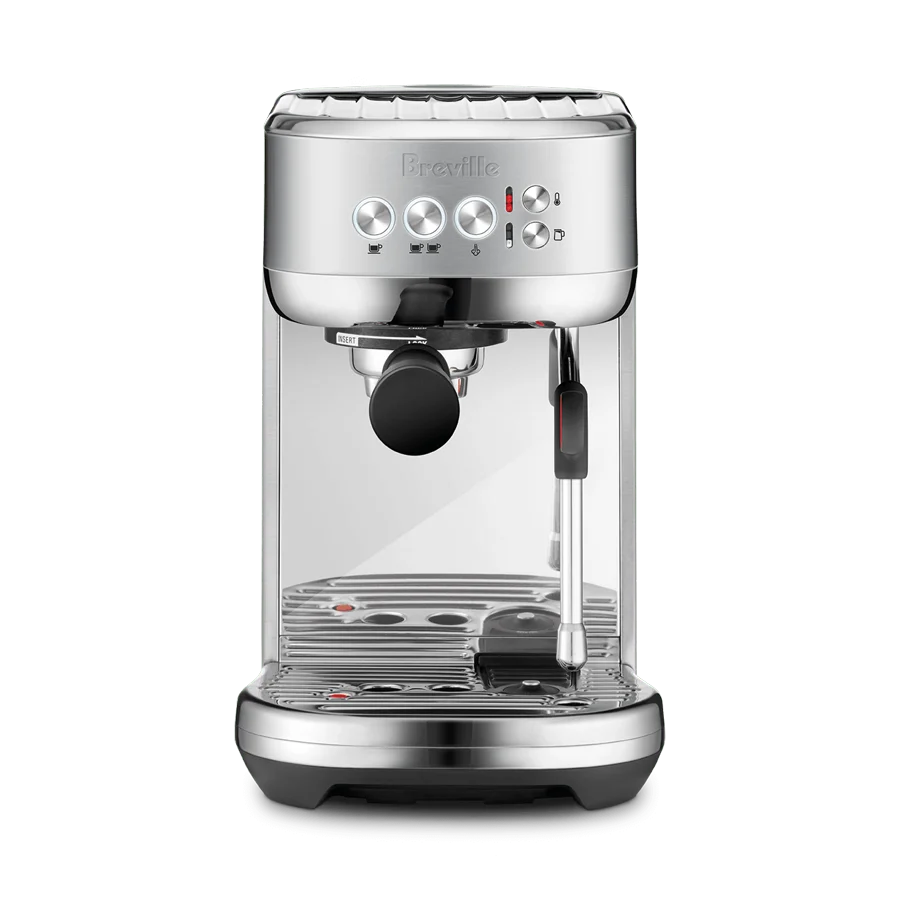
Breville Bambino Plus
A small portafilter machine with an automatic steam wand, so you learn shots first and milk later.
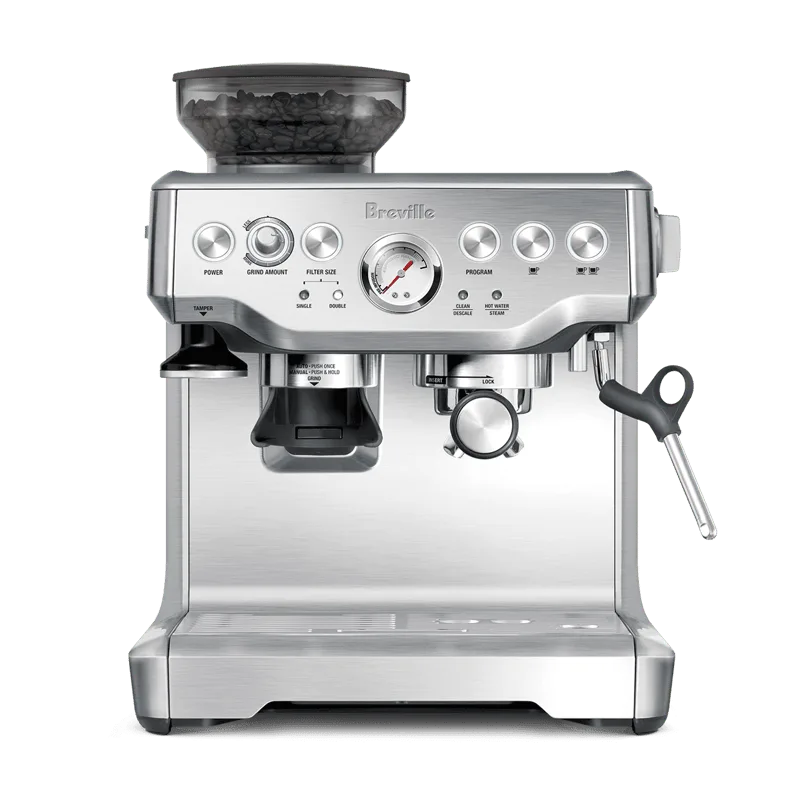
Breville Barista Express
A grinder, a pressure gauge and a steam wand in one box, so you do not have to choose a grinder on day one.
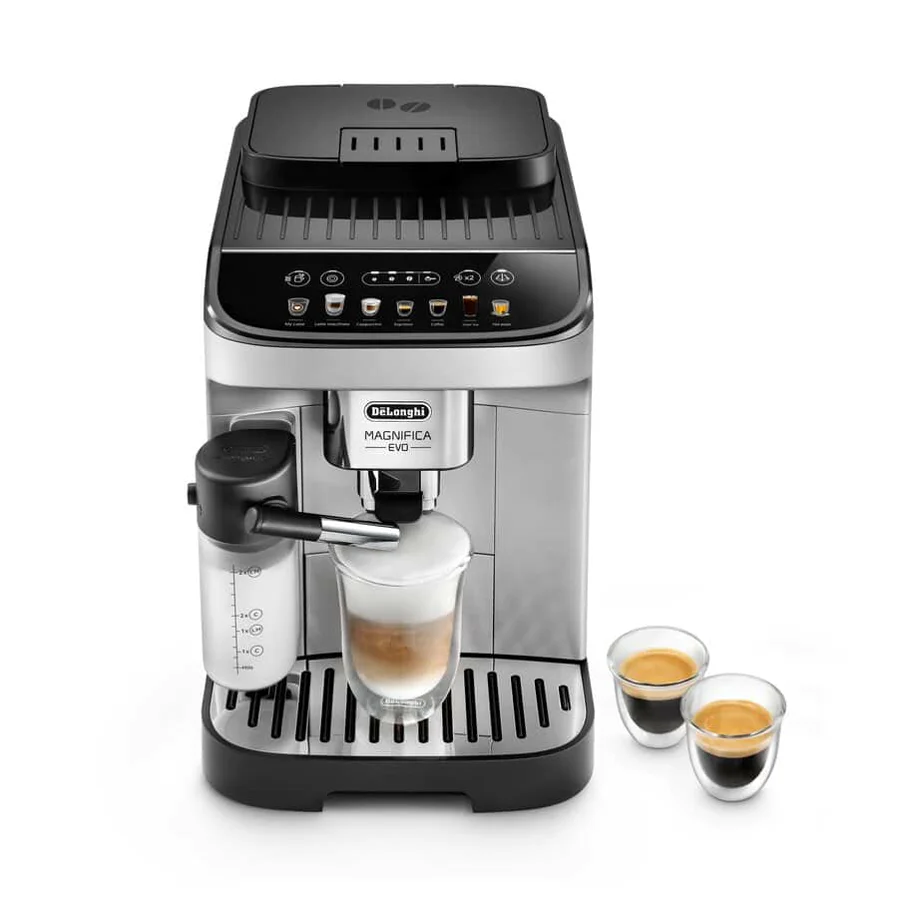
De'Longhi Magnifica Evo
Push-button espresso and Americanos with a steam wand or an automatic milk carafe.
If you want espresso with no learning at all, buy the Philips 3200 LatteGo. You press a button for a cappuccino and rinse two milk parts after. If you want to learn to make espresso yourself, buy the Breville Bambino Plus. Its steam wand textures milk on its own, so you learn one skill at a time.
How we chose
We did not use these machines ourselves. We compared manufacturer specs, manuals and long-term owner reports, and we ranked each machine by how much a new owner must learn before the first good drink. Every pick is sold new in the US in 2026.
A beginner machine has three traits. It forgives small mistakes, it tells you what to clean and when, and it does not need a second appliance to work well. No machine here is perfect on all three, so each section says which trait it gives up.
First decision: push-button or hands-on
A superautomatic grinds, doses, tamps and brews for you. You learn the menu and the cleaning routine, nothing more. A semi-automatic needs you to grind, dose, tamp and time each shot, and steam milk by hand. Owners commonly report that the first few weeks bring sour or bitter shots while they learn.
Pick push-button if you want the same drink every morning with no effort. Pick hands-on if making the drink is part of the fun. Our superautomatic vs semi-automatic guide compares the daily minutes and the total cost.
Philips 3200 LatteGo: easiest overall
Philips lists a ceramic grinder with 12 settings, a 1.8 L tank, a 275 g bean hopper and a 15-bar pump. The LatteGo carafe is two plastic parts with no tubes. You rinse them under the tap or put them in the dishwasher. The US model we cover is the EP3241/54.
Why it suits beginners: it has the shortest path from box to cappuccino of any pick here. The milk carafe is the simplest to clean of any automatic milk system we compared.
The real weakness: the menu is short and the body is mostly plastic. Philips’s manual asks you to remove the brew group and rinse it each week. Our Philips 3200 LatteGo review covers the US versions.
Price band: an estimated $450 to $600 on sale, against a list price of about $800.
Philips 3200 LatteGo: one-touch cappuccino with a milk carafe you can put in the dishwasher.
Check price →Breville Bambino Plus: best to learn on
The Bambino Plus (BES500) uses Breville’s ThermoJet heater, which reaches brewing temperature in about 3 seconds. It has a 54 mm portafilter, a 1.9 L tank and an automatic steam wand. You set the milk temperature and foam level, put the pitcher under the wand and it stops on its own. Retailers list it at 7.7 inches wide.
Why it suits beginners: it ships with pressurized (dual-wall) baskets, which forgive pre-ground coffee and an uneven tamp. When your skills improve, you switch to the single-wall baskets for better shots. The automatic wand means you can make a decent latte in the first week.
The real weakness: there is no grinder. For good shots in the single-wall baskets, budget an estimated $150 to $400 for an espresso grinder. Read our Bambino Plus review for the grinder pairing.
Price band: about $400 to $500.
Breville Bambino Plus: a 3-second heat-up and a steam wand that textures milk for you.
Check price →Breville Barista Express: best all-in-one to learn on
The Barista Express (BES870XL) adds a conical burr grinder with 16 settings to a 54 mm portafilter machine. It has a PID-controlled Thermocoil heater and an analog pressure gauge. Breville lists it at 15.9 by 13.1 by 12.4 inches.
Why it suits beginners: you do not need to choose a separate grinder. The gauge shows whether your grind is too fine or too coarse, which shortens the learning curve.
The real weakness: the steam wand is fully manual, so milk takes practice. Switching from brewing to steaming takes time. Our Barista Express review lists every limit.
Price band: about $550 to $700.
De’Longhi Magnifica Evo: easiest on a budget
The Magnifica Evo grinds and brews at the push of a button. The ECAM29043SB has a manual steam wand. The ECAM29084SB has the LatteCrema automatic milk carafe and 7 one-touch drinks. Both versions share 13 grind settings, a 250 g hopper and a 60 oz tank.
Why it suits beginners: espresso and Americanos need no skill at all. If you buy the wand version, you can learn milk later without changing machines.
The real weakness: the wand version does not make one-touch milk drinks. The brew unit is removable and you rinse it by hand. Check the model number before you buy, because our link shows both versions. See our Magnifica Evo review.
Price band: about $500 to $750 for the wand version, and about $600 to $900 for the carafe version.
Comparison table
| Machine | Type | Grinder | Milk | What you learn | Price band |
|---|---|---|---|---|---|
| Philips 3200 LatteGo | Superautomatic | Ceramic, 12 settings | Two-part carafe | Menu and weekly rinse | Est. $450 to $600 |
| Breville Bambino Plus | Semi-automatic | None | Automatic wand | Grind, dose, tamp | $400 to $500 |
| Breville Barista Express | Semi-automatic | Conical, 16 settings | Manual wand | Grind, tamp, milk | $550 to $700 |
| De’Longhi Magnifica Evo | Superautomatic | Conical, 13 settings | Wand or carafe | Menu, brew unit rinse | $500 to $900 |
Beginner mistakes to avoid
- Buying a portafilter machine without a grinder plan. Pre-ground coffee runs too fast in single-wall baskets. Use the pressurized baskets, or buy a grinder.
- Choosing by drink count. A menu of 20 drinks does not make a machine easier. Count the parts you must wash.
- Skipping the basics. Start from 18 g of coffee in and about 36 g of espresso out in 25 to 30 seconds. Our espresso basics guide explains each number.
For a fast decision based on budget and counter space, take the espresso machine finder quiz.
Espresso Machines for Beginners: reviews and guides
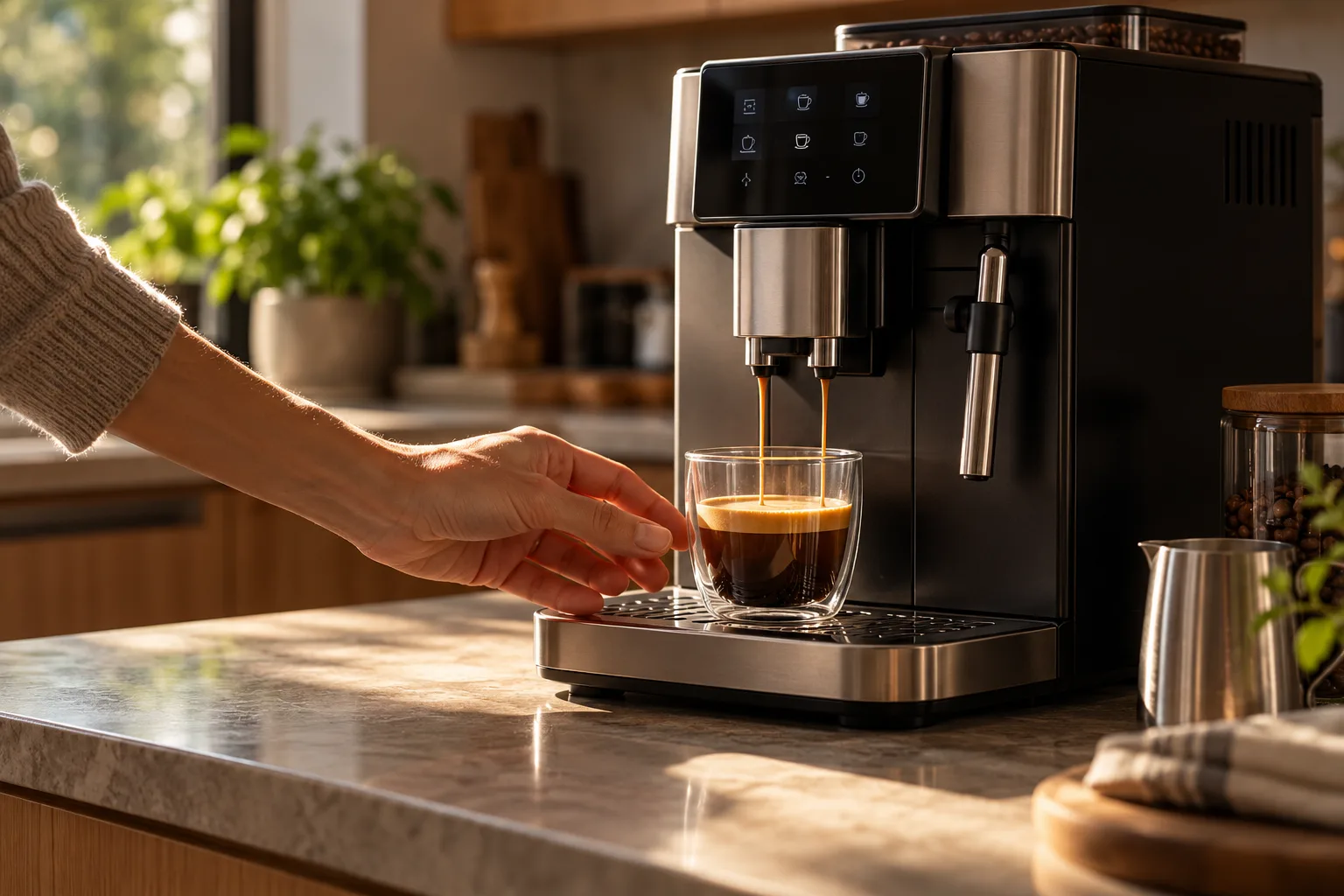 Espresso Machine FinderAnswer four quick questions about drinks, effort, budget and counter space to get a personalized espresso machine recommendation.Breville Bambino Plus Review (BES500)The Bambino Plus BES500 heats in about 3 seconds and steams milk on its own. It suits small kitchens and beginners who will add a burr grinder.Breville Barista Express Review (BES870XL)The Barista Express BES870XL puts a 16-setting grinder, a 54 mm portafilter and a steam wand in one box. It suits beginners who want to learn real espresso.
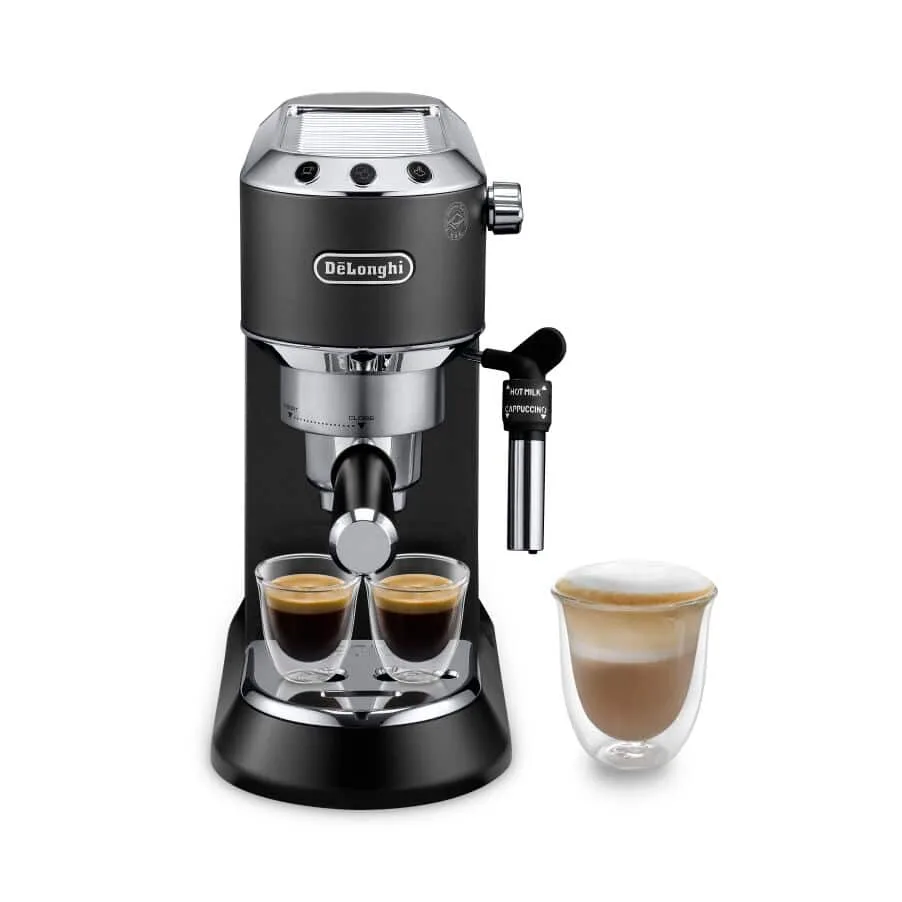 De'Longhi Dedica EC685 ReviewThe Dedica EC685 is a 6-inch-wide espresso machine with pressurized baskets that forgive pre-ground coffee. It suits beginners with small kitchens and small budgets.De'Longhi Magnifica Evo ReviewThe Magnifica Evo comes in two US versions: ECAM29043SB with a steam wand and ECAM29084SB with a LatteCrema carafe. Here is which to buy and why.
 Espresso Basics: What It Is and How to StartEspresso is coffee brewed with hot water under about 9 bar. Start with 18 g in, 36 g out in 25 to 30 seconds, then adjust the grind by taste.
 Espresso Machine Types ExplainedFive espresso machine types: manual lever, semi-automatic, automatic, superautomatic and capsule. See how much control, effort and money each one takes.Philips 3200 LatteGo ReviewThe Philips 3200 LatteGo (EP3241/54) makes five coffees and one-touch milk drinks with the easiest milk system to clean in its price band.Superautomatic vs Semi-Automatic Espresso MachinesBuy a superautomatic if you want milk drinks in about a minute. Buy a semi-automatic if you want control and can give an estimated 4 to 5 minutes a drink.