
Maintenance
How to Clean an Espresso Machine Milk System
Purge and wipe a steam wand after every drink. Rinse an automatic milk system after each use and clean it with milk cleaner every day you make milk drinks.
Milk is the dirtiest thing that goes through an espresso machine. Clean the milk path on the same day you use it: purge and wipe a steam wand after every drink, rinse an automatic milk system after each use, and run a milk cleaner cycle every day you make milk drinks. Dried milk protein blocks small passages within days and gives foam a sour smell.
The effort depends on the system. A steam wand takes an estimated ten seconds per drink. A carafe takes an estimated minute at the sink. A tube-fed frother on a superautomatic needs a cleaner cycle and a weekly strip-down.
Three kinds of milk system
| System | Found on | Daily effort | Weekly effort | Weak point |
|---|---|---|---|---|
| Steam wand | Semi-automatics, levers, some superautomatics | Purge and wipe after each drink | Soak tip, clear holes | Milk dries on the tip in minutes |
| Tube-fed frother | Jura, some De’Longhi and Miele models | Auto rinse, then milk cleaner cycle | Take apart and rinse parts | Hidden passages you cannot see into |
| Carafe or jug | Philips LatteGo, De’Longhi LatteCrema | Rinse or wash carafe after use | Wash all parts, check seals | Carafe must go in the fridge or be emptied |
If low cleaning effort matters most, pick a carafe system or a steam wand. Our superautomatic buying guide compares the milk systems on each current pick.
How to clean a steam wand
Before you steam
- Point the wand into the drip tray and open the valve for 1 to 2 seconds. This clears condensed water, which would thin your milk.
After every drink
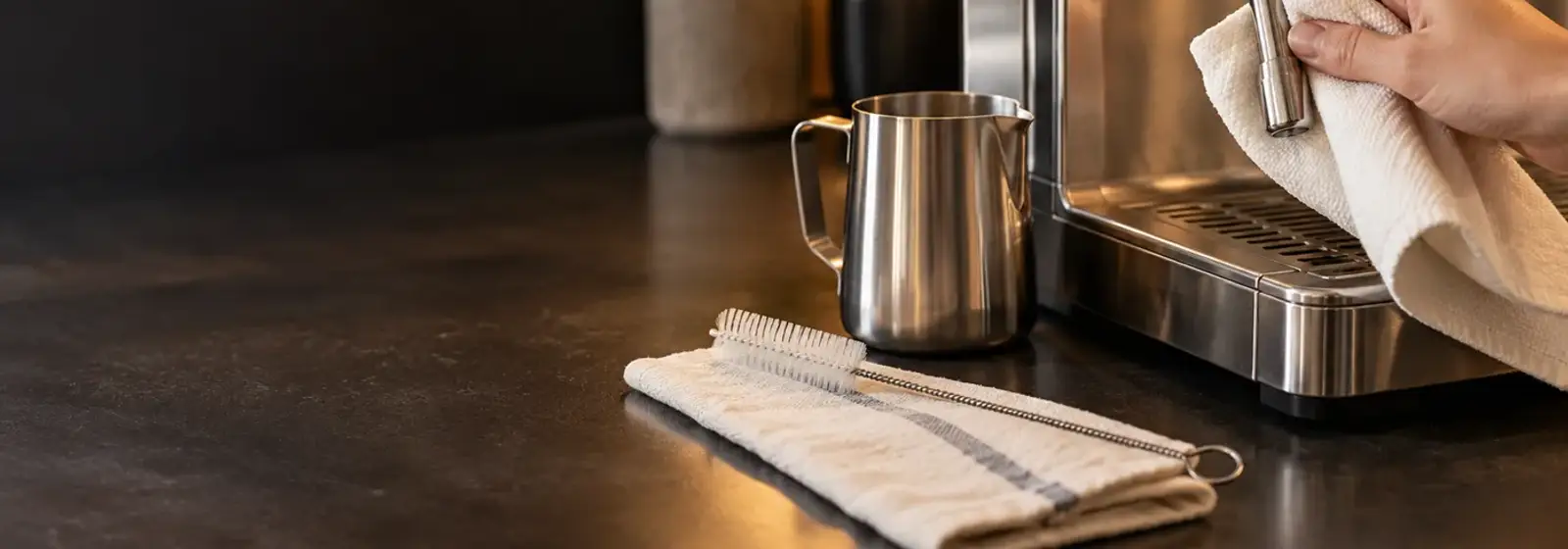
- Wipe the wand right away with a damp cloth kept only for the wand. Milk bakes onto a hot wand quickly.
- Open the valve for 1 to 2 seconds into the drip tray. When steam stops, the wand cools and can suck milk back inside. The purge pushes it out.
Once a week
- Unscrew the steam tip if your wand has one. Soak it in hot water with milk system cleaner.
- Clear each hole with a pin or the cleaning tool that came with the machine. Breville includes one with machines like the Barista Express.
- If your wand has a sleeve, like the frothing attachment on a De’Longhi Dedica, slide it off and wash it.
If steam comes out weak or sideways from one hole, a blocked tip is the usual cause. Soak it before you suspect the boiler.
How to clean an automatic milk system (tube-fed)
Tube-fed frothers draw milk up a pipe and mix it with steam and air in a small chamber. Jura uses this design on the Jura E8 and most of its range. It gives one-touch drinks, but milk residue builds up in places you cannot see.
After every milk drink: rinse when the machine asks. Jura machines prompt a short rinse that pushes hot water through the frother. Do not skip it.
Every day you make milk: run the milk system cleaning program. Jura’s manuals say to clean the milk system daily when milk has been prepared.
- Fill the milk cleaning container with fresh water to the mark.
- Add one dose of milk system cleaner. With Jura’s mini-tabs, one dose is one press of the bottle’s dispenser, not a count of tabs.
- Connect the milk pipe to the container and put a vessel under the spout.
- Start the program from the maintenance menu and follow the prompts. The machine runs cleaner through the frother, then asks for fresh water to rinse.
Use the brand’s own cleaner. Jura’s manuals say to use only original Jura maintenance products. Do not put a brew group cleaning tablet in the milk container. It is the wrong chemistry for that circuit. This guide explains which Jura cleaning product goes where.
Jura milk system cleaner: mini-tabs in a dosing bottle for the daily Jura milk cleaning program. One press, one cycle.
Check price →Every week: take the frother apart. Remove the milk pipe and the spout parts, then rinse each piece under warm running water. Check the small O-rings for cracks. Your manual shows the order of the parts. Put them back exactly as they came out, or the frother pulls air and the foam goes thin.
How to clean a carafe system
Carafe systems put the milk path in a part you can lift off and wash. This is the easiest automatic design to keep clean.
Philips LatteGo. The LatteGo has two main parts and no milk tubes. Rinse both parts under the tap after each use, or put them in the dishwasher. This is why the Philips 3200 LatteGo is popular with buyers who hate cleaning.
De’Longhi LatteCrema. After each milk drink on the Magnifica Evo, the Clean button light blinks. Leave the carafe in place, put a cup under the spout and press Clean. Hot water and steam flush the spout. De’Longhi says to take the carafe apart for a full clean within two days of use. Store leftover milk in the fridge in the carafe and use it within two days. Our De’Longhi Magnifica Evo review covers which Evo versions have the carafe and which have a wand.
Any carafe: do not leave milk in it on the counter. Either put the filled carafe in the fridge or empty and wash it.
Milk cleaner products and what to avoid
| Product | Use it for | Notes |
|---|---|---|
| Brand milk cleaner | Tube-fed frothers, carafe spouts | The program’s dose and rinse assume it |
| Hot water only | Daily rinse, steam wand soak | Fine for rinsing, not enough for daily protein build-up in a frother |
| Dish soap | Carafe parts at the sink | Rinse well; never run it through the machine |
| Vinegar | Do not use | Attacks seals and does not remove milk fat well |
| Brew group cleaning tablets | Do not use in the milk path | Wrong product for milk protein |
| Descaler | Do not use in the milk path | Acid belongs in the water tank during a descale |
Milk cleaner is not the same as the cleaner for your brew unit. Brew unit tablets dissolve coffee oil. Milk cleaner breaks down milk fat and protein. Our cleaning guide covers the brew side.
Signs your milk system needs more than a rinse
- Foam is thinner or more bubbly than it used to be.
- The frother sputters, hisses or spits milk.
- Milk comes out cooler or more slowly.
- A sour smell comes from the spout or milk pipe.
- The machine does not draw milk at all.
Run a full cleaner cycle first. Then take the frother apart and check that each part is clean, the O-rings are whole, and the parts are seated. A missing or cracked O-ring lets air in and kills the foam. For Jura machines, this guide to a Jura milk frother that is not working goes through each fix. For other faults, see our troubleshooting guide.
Tips for better foam and less mess
- Start with cold milk. Milk straight from the fridge foams better and gives you more time on a steam wand.
- Aim for about 60 to 65 °C (140 to 149 °F). Hotter milk scorches, tastes flat and leaves more residue.
- Choose barista plant milks. Standard oat and almond milks foam poorly. Barista versions add fat and stabilizers.
- Use only the milk you need. Leftover milk that is reheated foams poorly.
FAQ
Do I need to clean the milk system if I only make one latte a day? Yes. One drink is enough to leave protein in the frother. Rinse after the drink and run the cleaner cycle that day.
Can milk system parts go in the dishwasher? Some can. Philips says LatteGo parts can. For other brands, check the manual for each part, since some O-rings and small parts should be washed by hand.
How often should I replace frother parts? Replace O-rings and the milk pipe when they crack, harden or look stained after cleaning.