Gaggia Classic Evo Pro Review
The Classic Evo Pro keeps the design Gaggia has sold for decades: a small boiler, a 3-way solenoid valve, a 58 mm chrome-plated brass group and a commercial-style steam wand. The current North American version ships with a 9-bar over-pressure valve.
We may earn a commission from qualifying purchases. Our editorial verdict is independent.
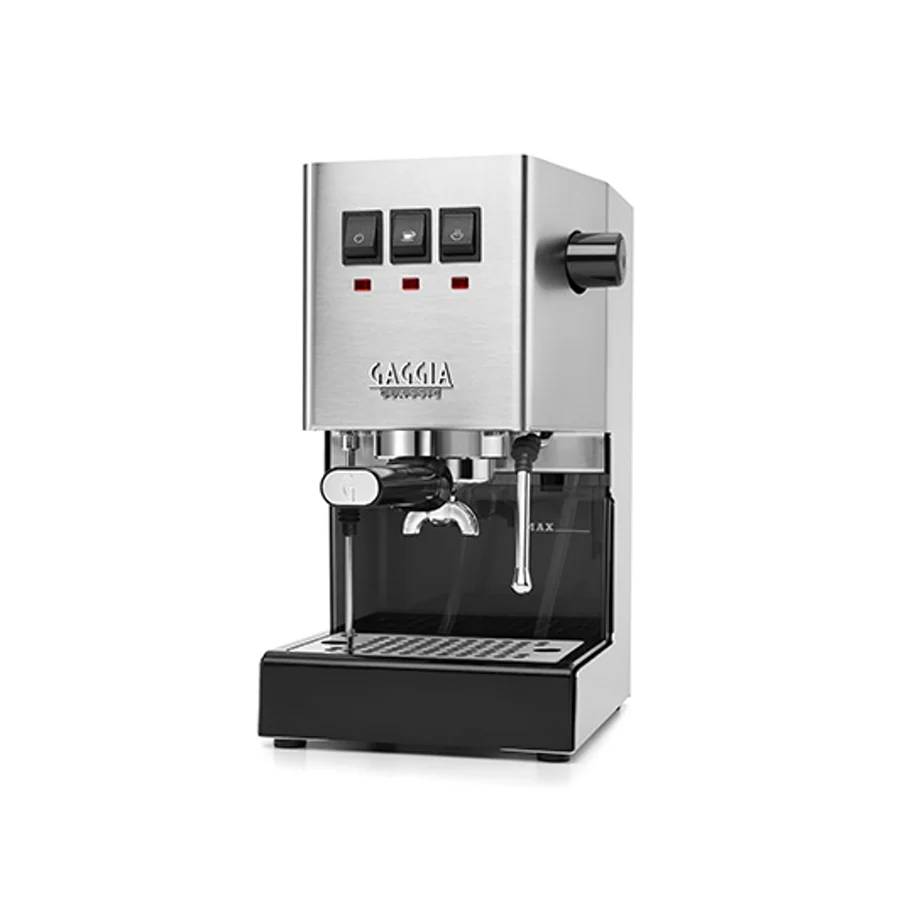
Buy the Classic Evo Pro if you want a durable, repairable espresso machine with commercial-size parts and you will learn temperature and grind by feel. It makes excellent espresso with a good grinder. Skip it if you want a built-in grinder, temperature control or easy back-to-back milk drinks.
Who it’s for
Patient beginners and tinkerers who drink mostly espresso or one milk drink at a time and want a machine they can maintain for many years.
Who should skip it
Buyers who will not buy a separate grinder, people who want consistent results without practice, and homes that make several milk drinks in a row.
Strengths and weaknesses
What we like
- 58 mm commercial portafilter takes standard baskets and tampers
- 9-bar over-pressure valve on the current version
- 3-way solenoid valve leaves drier pucks and allows backflushing
- Commercial-style steam wand
- Simple design with widely available parts
What to know
- No PID, so brew temperature drifts unless you manage it
- Single boiler: you wait between brewing and steaming
- No grinder; you need one that grinds fine enough for espresso
- Plastic tamper in the box is a placeholder
- Small drip tray
The Gaggia Classic Evo Pro is the machine to buy if you want a simple, durable espresso machine with commercial-size parts and you will put in the practice. US retailers list it at around $450 to $550. You also need a grinder that grinds fine enough for espresso. If you want results without learning, the Breville Bambino Plus is easier, and the Barista Express adds a grinder.
This review draws on manufacturer specifications, manuals, retailer spec sheets and long-term owner reports, not on our own use.
Who the Classic Evo Pro is for
It fits a buyer who drinks mostly espresso, or one milk drink at a time, and enjoys learning. The Classic has few electronics and uses standard parts, so many owners keep one running for a decade or more with gaskets and descaling.
Skip it in three cases. If you want the same shot every morning without thinking about temperature, a PID machine is easier. If you make three or four lattes in a row, the single boiler slows you down. If you do not want to buy a grinder, the Barista Express costs a little more and includes one.
What changed in the Evo Pro
Gaggia updated the Classic Pro to the Classic Evo Pro for North America in 2023. Retailer announcements list these changes:
| Feature | Classic Pro (older) | Classic Evo Pro (current) |
|---|---|---|
| Over-pressure valve | Higher-pressure spring | 9 bar |
| Boiler | Aluminum | Aluminum with anti-scale coating |
| Portafilter | Chrome-plated brass | Stainless steel |
| Steam wand | Commercial-style | Commercial-style |
The 9-bar valve is the main gain. Older Classic Pro owners often fitted a 9-bar spring themselves. If you buy used or old stock, look for “Evo” in the name and the 9-bar spec in the listing.
Shot quality and temperature
The 58 mm group and portafilter are the same size as most café machines. Precision baskets, tampers and distribution tools from many makers fit. The 3-way solenoid valve releases pressure after the shot, so the puck comes out drier and you can backflush.
The machine has no PID. The boiler thermostat lets brew temperature swing by several degrees. Owners manage this with “temperature surfing”: run a little water through the group, wait a set time, then brew. It works, but it is a habit you have to learn. Many owners later fit an aftermarket PID kit. Opening the machine can affect the warranty, so wait until it ends.
Gaggia includes single and double baskets plus a pressurized double basket. Use the pressurized basket only with pre-ground coffee. Switch to the standard baskets once you grind fresh. Start near a 1:2 ratio, twice the dose weight in the cup, in 25 to 30 seconds. Many owners later buy a larger 58 mm precision basket.
The grinder you need
The Classic shows grinder flaws clearly. A blade grinder or a drip-only burr grinder will not work. The Baratza Encore ESP is a sensible entry choice. Our espresso grinder guide covers stepless and single-dose options if you want more control.
Gaggia Classic Evo Pro: 58 mm commercial parts and a 9-bar valve in a simple machine built to last.
Check price →Steaming milk
The commercial-style wand is strong for a small machine and can make good microfoam. The limit is the single boiler. After a shot, flip the steam switch and wait for the boiler to reach steam temperature. Purge the wand, then steam. Before the next shot, run water through the group to bring the boiler back down.
For one cappuccino this adds a minute or two. For four lattes it is slow. Homes that make several milk drinks in a row should look at a dual boiler such as the Breville Dual Boiler.
Cleaning and maintenance
- After every shot: Knock out the puck and rinse the basket.
- After milk: Purge and wipe the wand at once.
- Every week: Backflush with water using a blind basket.
- Every month or so: Backflush with a cleaning detergent made for espresso machines.
- On schedule: Descale by water hardness. Single boiler machines collect scale on the element and in the solenoid valve, and loose flakes can jam the valve. Our descaling guide sets the interval.
Group gaskets and shower screens are standard parts. Replace the gasket when the portafilter locks past center or leaks around the rim. Replace it on condition, not on a fixed date.
Classic Evo Pro vs the Barista Express
The Barista Express gives a beginner more help: a built-in grinder, PID control, a pressure gauge and dual wall baskets. The Classic gives you commercial-size parts, a simpler build and easier home repairs, but no grinder and no temperature control. Our Barista Express vs Classic Evo Pro comparison sets out which buyer each one suits.
Buying advice
Buy a 58 mm tamper with the machine, because the plastic tamper in the box is hard to use well. Check the listing says Classic Evo Pro and 9 bar. Gaggia sells several colors with the same internals, so pick on price and looks. Our Gaggia brand guide covers the rest of the range, including the superautomatics.
Key specifications
- Machine type
- Semi-automatic, single boiler, no grinder
- Boiler
- Aluminum with anti-scale coating, 3-way solenoid valve
- Pressure
- Vibratory pump with 9-bar over-pressure valve
- Group and portafilter
- 58 mm, chrome-plated brass group (per retailer listings), stainless steel portafilter
- Baskets
- Single, double and pressurized double
- Milk
- Commercial-style steam wand
- Water tank
- 72 oz (about 2.1 L)
- Body
- Brushed stainless steel or painted color finishes
- Dimensions (W x D x H)
- 8 x 9.5 x 14.2 in
- Warranty
- 2 years parts and labor (US retailer listings)
Alternatives worth considering
Should you buy the Gaggia Classic Evo Pro?
Buy the Classic Evo Pro if you want a durable, repairable espresso machine with commercial-size parts and you will learn temperature and grind by feel. It makes excellent espresso with a good grinder. Skip it if you want a built-in grinder, temperature control or easy back-to-back milk drinks.
Accessories for the Gaggia Classic Evo Pro
Related reviews and guides
Breville Barista Express vs Gaggia Classic Evo ProBuy the Barista Express if you want a grinder and PID in one box. Buy the Gaggia Classic Evo Pro if you want 58 mm parts and a machine you can repair.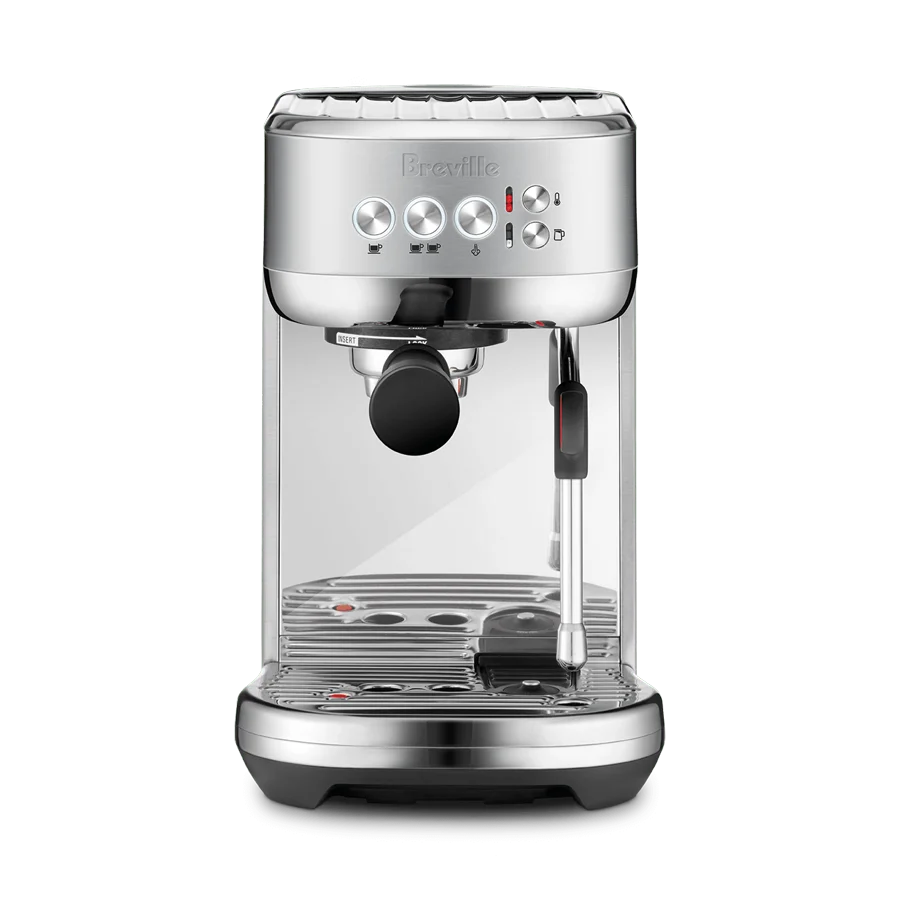 Breville Bambino Plus Review (BES500)The Bambino Plus BES500 heats in about 3 seconds and steams milk on its own. It suits small kitchens and beginners who will add a burr grinder.
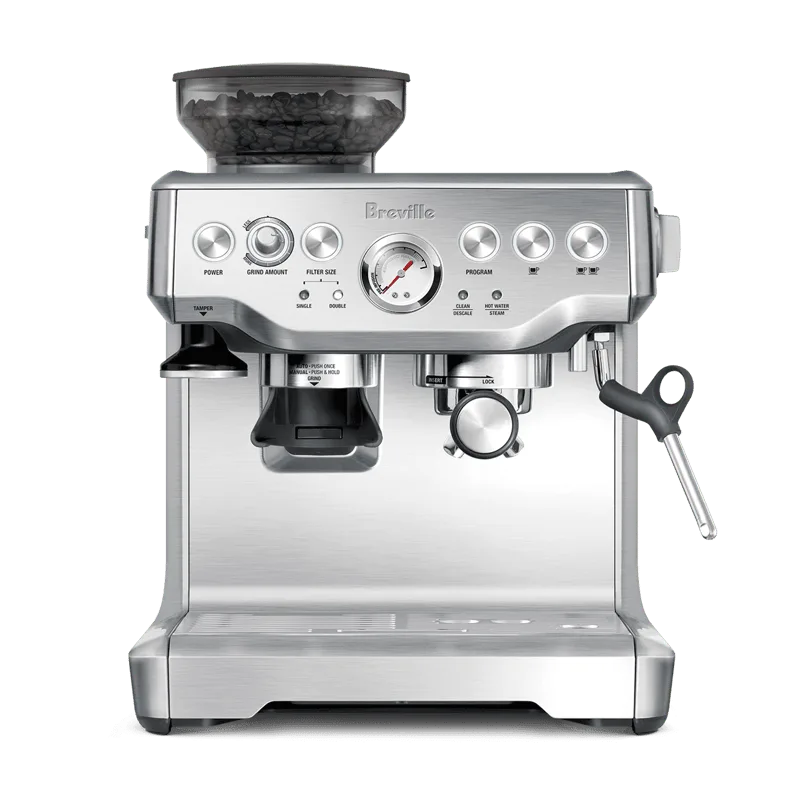 Breville Barista Express Review (BES870XL)The Barista Express BES870XL puts a 16-setting grinder, a 54 mm portafilter and a steam wand in one box. It suits beginners who want to learn real espresso.