Brand guide
Gaggia Espresso Machines: Which Model to Buy
Gaggia's best buy for most US readers is the Classic Evo Pro, a repairable 58 mm machine. Its superautomatics suit buyers who want removable brew groups.
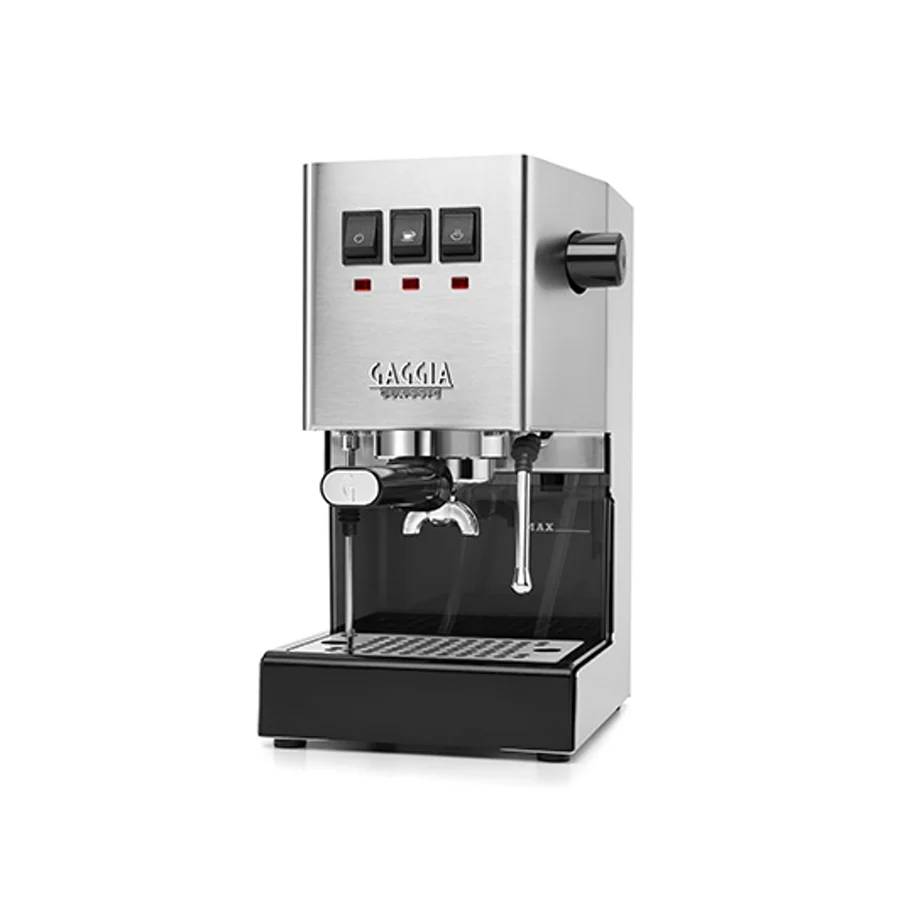
For most US buyers, the Gaggia to consider is the Classic Evo Pro. It is a simple single boiler machine with a 58 mm commercial portafilter, a 9-bar valve and parts you can replace at home. Gaggia’s superautomatics are a separate choice for people who want one-touch drinks and a brew group they can take out and rinse. If you want a manual machine with a built-in grinder, Gaggia has no strong option; look at Breville.
This guide draws on Gaggia’s specifications, retailer spec sheets and long-term owner reports, not on our own use.
Who Gaggia is
Gaggia is an Italian brand founded in Milan by Achille Gaggia. His 1938 patent described a machine that used water pressure instead of steam, and his 1947 lever-piston patent helped create espresso with crema. Saeco bought Gaggia in 1999, so Gaggia superautomatics share their removable brew group design with Saeco machines. In the US, Gaggia North America handles sales and support.
The Gaggia line-up for US buyers
| Machine | Type | Who it suits |
|---|---|---|
| Classic Evo Pro | Semi-automatic, single boiler, 58 mm | Patient learners who want a durable, repairable machine and will buy a grinder |
| Magenta, Cadorna, Anima and Babila | Superautomatic | One-touch drinks, with a removable brew group |
| Accademia | Superautomatic, top model | One-touch milk drinks with a milk carafe and more settings |
Gaggia sells many superautomatic models and colors that change by retailer. Compare them on three things: the milk system (manual wand or automatic carafe), the number of saved drinks, and the price.
The Classic Evo Pro: the reason most people buy Gaggia
The Classic has been sold in some form for decades, and its basic design has changed little. The current Classic Evo Pro adds a 9-bar over-pressure valve, an anti-scale coated aluminum boiler and a commercial-style steam wand. It has a 58 mm chrome-plated brass group, a 3-way solenoid valve and a 72 oz (about 2.1 L) tank. It usually sells for about $450 to $550 at US retailers.
What it does well:
- Commercial-size parts. The 58 mm portafilter takes the same baskets and tampers as café machines.
- Repairability. Gaskets, shower screens, valves and pumps are standard parts. Owners commonly replace them at home with basic tools.
- Strong steam for its size. The commercial-style wand makes good microfoam for one drink at a time.
What it does not do:
- No PID. Brew temperature swings, so owners learn to flush and time their shots, or fit an aftermarket PID.
- No grinder. Budget an estimated $200 more for an entry espresso grinder.
- One boiler. You wait between brewing and steaming.
Our full Classic Evo Pro review covers dial-in, steaming and maintenance. If you are deciding between it and Breville’s all-in-one, read our Barista Express vs Classic Evo Pro comparison.
Gaggia Classic Evo Pro: 58 mm commercial parts and a 9-bar valve in a machine built for long ownership.
Check price →How to tell the Classic versions apart
Older Classic Pro units are still sold used and as old stock. Look for three signs of the current model:
- The name. The current machine is the Classic Evo Pro.
- The pressure spec. The listing should say 9 bar. Older Classic Pro units shipped with a stiffer valve spring, and many owners fitted a 9-bar spring themselves.
- The boiler. The Evo Pro lists an anti-scale coated boiler.
An older Classic Pro with a 9-bar spring already fitted is a fair used buy. Check the group gasket and ask when it was last descaled.
Gaggia superautomatics
Gaggia’s superautomatics grind, tamp and brew at the press of a button. Like Saeco and Philips machines, they have a brew group you remove and rinse under the tap. That makes basic care cheap and easy, but you have to do it: owners commonly report that a skipped weekly rinse leads to clogs and errors.
- Entry and mid models such as the Magenta and Cadorna range use either a manual steam wand or an automatic milk carafe, depending on the version. The Cadorna Prestige is the common mid-range pick with a milk carafe.
- The Accademia is Gaggia’s top model, with an automatic milk carafe and a separate steam wand.
How do they compare with Jura? Jura uses a fixed brew unit with cleaning tablets instead of a removable group, and usually costs more. Gaggia machines cost less to buy and are easier to clean by hand, but need more regular attention. Our list of the best superautomatic espresso machines compares Gaggia’s rivals.
Repairability and parts
Gaggia’s strength is long ownership. The Classic is one of the most widely repaired home machines, and parts for it are easy to find. The superautomatics use more electronics, but the removable brew group means the most common fault, a dirty group, is something you can fix at the sink.
Two habits cover most problems:
- Descale on schedule. Single boiler machines collect scale on the element and in the solenoid valve, and loose flakes can jam the valve. Superautomatics collect scale in their thermoblocks. Our descaling guide sets the interval by water hardness.
- Clean the coffee path. Backflush the Classic with detergent about once a month. Rinse a superautomatic’s brew group weekly. Our espresso machine cleaning guide covers both routines.
Should you buy a Gaggia?
Buy the Classic Evo Pro if you want a manual machine for the long term and you will learn temperature and grind by feel. Buy a Gaggia superautomatic if you want one-touch drinks for less than a Jura and do not mind rinsing a brew group each week. Skip Gaggia if you want a beginner machine with a built-in grinder and temperature control; that buyer is better served by Breville, and our budget espresso machines page lists other choices under about $500.
Gaggia reviews and guides
 Breville Barista Express vs Gaggia Classic Evo ProBuy the Barista Express if you want a grinder and PID in one box. Buy the Gaggia Classic Evo Pro if you want 58 mm parts and a machine you can repair.Gaggia Classic Evo Pro ReviewThe Gaggia Classic Evo Pro is a simple single boiler machine with a 58 mm commercial portafilter and a 9-bar valve. It suits patient learners who want parts that last.