Comparison
Breville Barista Express vs Gaggia Classic Evo Pro
Buy the Barista Express if you want a grinder and PID in one box. Buy the Gaggia Classic Evo Pro if you want 58 mm parts and a machine you can repair.
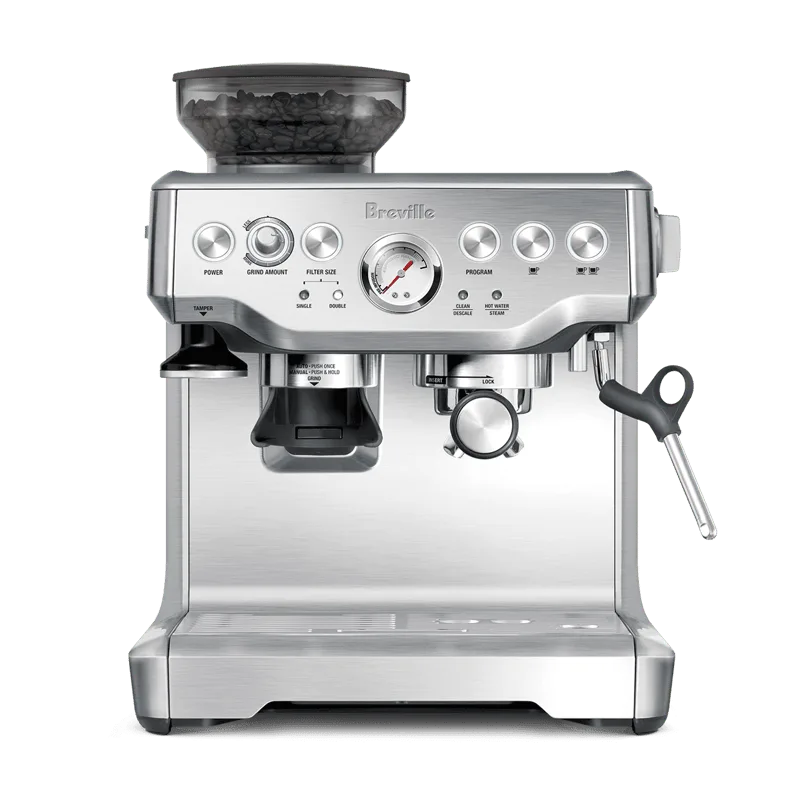
Breville Barista Express
Grinder, PID and steam wand in one box, so you can start pulling shots on day one.
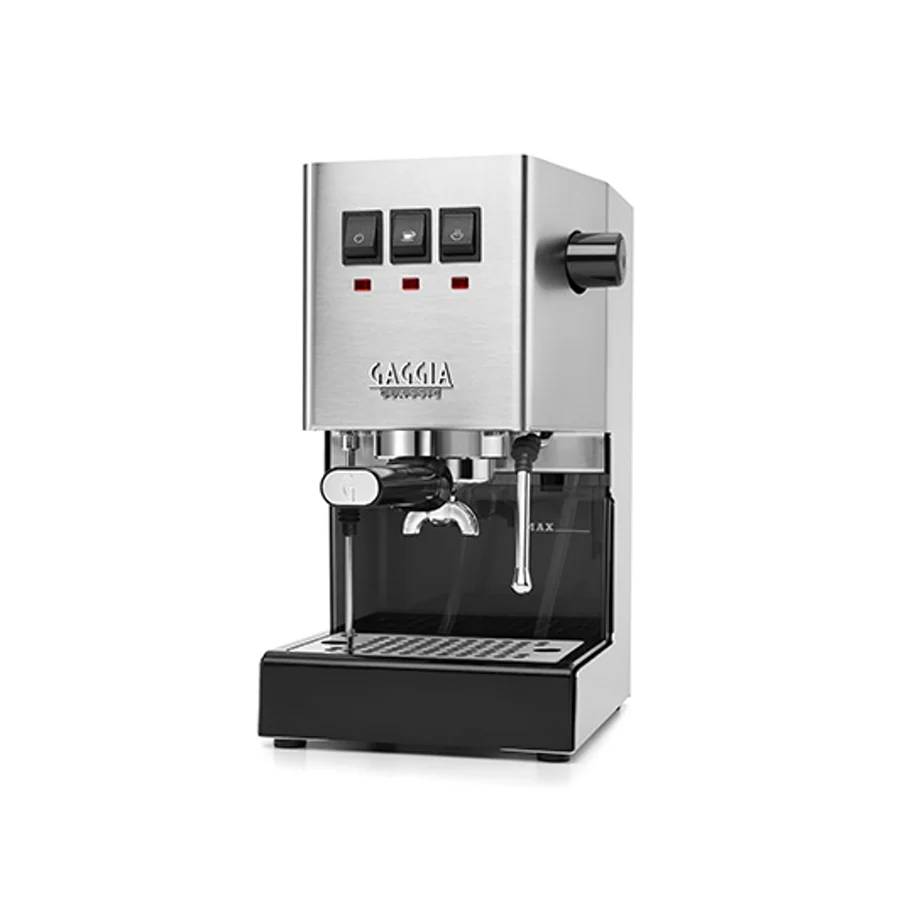
Gaggia Classic Evo Pro
Commercial 58 mm parts and a simple build that owners keep running for years.
Buy the Breville Barista Express if you are new to espresso and want one box that grinds, brews and steams, with temperature control built in. Buy the Gaggia Classic Evo Pro if you want commercial-size parts, a simple machine you can fix yourself, and you will buy a separate grinder. The two machines cost about the same, but the Gaggia’s real cost is higher because the grinder is extra.
We compare published specifications, manuals and long-term owner reports. We do not claim hands-on use.
The short answer by buyer
| If you… | Buy |
|---|---|
| Have no grinder and want to start this week | Barista Express |
| Want the same shot every day with little fuss | Barista Express |
| Drink light roasts and want fine grind control | Gaggia, with a good grinder |
| Want 58 mm baskets, tampers and tools | Gaggia |
| Plan to keep the machine 10 years and repair it | Gaggia |
| Want a pressure gauge to learn from | Barista Express |
| Make three or more milk drinks in a row | Neither; look at a dual boiler |
Specs side by side
| Breville Barista Express (BES870XL) | Gaggia Classic Evo Pro | |
|---|---|---|
| Typical price | About $550 to $700 | About $450 to $550 |
| Grinder | Built in, conical burr, 16 settings | None |
| Heating | Thermocoil with PID | Single aluminum boiler, thermostat |
| Pressure | 15-bar pump, pre-infusion, about 9 bar extraction | Vibratory pump, 9-bar over-pressure valve |
| Portafilter | 54 mm | 58 mm commercial |
| Baskets | Single and dual wall, 1 and 2 cup | Single, double, pressurized double |
| Pressure gauge | Yes | No |
| Steam | Manual wand | Commercial-style manual wand |
| Water tank | 67 oz (about 2 L) | 72 oz (about 2.1 L) |
| Width | 15.9 in | About 8 in |
Breville’s US warranty on the Barista Express is 1 year. The Gaggia warranty differs by seller, so check the listing before you buy.
Total cost: the grinder decides it
The Gaggia’s lower sticker price does not hold once you add a grinder. A capable entry espresso grinder such as the Baratza Encore ESP costs an estimated $200. That puts a Gaggia setup at an estimated $650 to $750, compared with $550 to $700 for the Barista Express alone.
The Gaggia setup buys a better grinder than the one inside the Breville. It also means two machines on the counter. Our espresso grinder guide compares grinders for both machines.
If you already own a good espresso grinder, the Gaggia is the cheaper choice by a wide margin.
Shot quality and consistency
The Barista Express is the more consistent machine for a beginner. PID control holds brew water near 200 °F, and the pressure gauge tells you whether the grind is too fine or too coarse. Its limit is the grinder: 16 steps are coarse, and owners commonly report trouble dialing in light roasts.
The Gaggia has no PID. Its boiler thermostat lets brew temperature swing, so owners learn to “temperature surf”: flush a little water, wait, then brew. With a good grinder and that habit, the Gaggia can pull excellent shots. Without them, results vary more from day to day.
The 58 mm portafilter on the Gaggia is the commercial standard. You can buy precision baskets and tampers from many makers. The Breville’s 54 mm size has fewer options.
Milk drinks
Both machines use a manual steam wand, and both make you wait between brewing and steaming. The Breville’s Thermocoil switches modes on its own after you turn the dial. On the Gaggia, you flip the steam switch, wait for the boiler to heat, purge, then steam. You then cool the boiler before the next shot.
Owners commonly describe the Gaggia’s commercial-style wand as the stronger of the two. Either machine handles one or two milk drinks at a time. If you make several in a row, a dual boiler such as the Breville Dual Boiler saves real time.
Size and counter space
The Gaggia is about 8 in wide, roughly half the width of the Barista Express. Add a grinder next to it and the total footprint is close to the Breville’s. The Breville keeps everything in one unit, which is simpler under low cabinets as long as you can reach the bean hopper on top.
Maintenance and lifespan
Both need the same basic care: rinse the basket after each shot, purge the wand, backflush with a cleaning tablet or detergent, and descale by water hardness. Our descaling guide sets the schedule.
The difference is repairs. The Gaggia uses simple parts that are easy to find and swap at home: group gaskets, shower screens, valves and the pump. The Breville has more electronics and a built-in grinder, and most repairs go through Breville service. Owners commonly keep a Classic running for many years with routine parts.
Breville Barista Express: the easier start, with a grinder and PID in one box.
Check price →Which one we would point you to
Choose the Barista Express if this is your first espresso machine, you do not own a grinder, and you want predictable shots soon. Read the full Barista Express review.
Choose the Gaggia Classic Evo Pro if you enjoy learning by feel, want parts that fit café tools, and will buy a good grinder now or already have one. Read the full Classic Evo Pro review.
If neither fits, the best semi-automatic espresso machines page covers easier and more advanced choices, including the Bambino Plus and the Barista Pro.
Gaggia Classic Evo Pro: commercial 58 mm parts in a simple machine built for long ownership.
Check price →